
How to Calculate Landed Cost for Importing Roller Blinds from China?
By UNITEC Technical & Export Team | Since 2002
Chapter 4. Understanding Total Cost: From EXW Price to Landed Cost (No Surprises)
Introduction
Many first-time importers assume that the supplier’s quoted price is the total cost of buying roller blinds from China. However, the factory price is only one part of the overall investment.
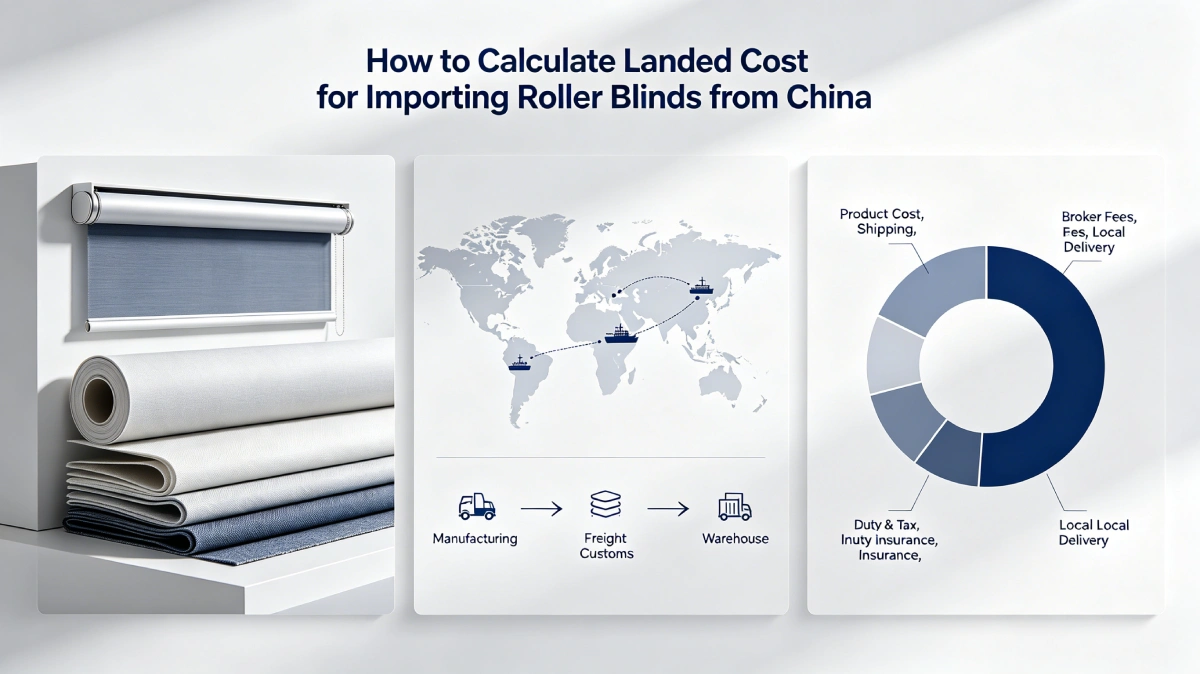
The actual amount you pay to bring roller blind fabrics or finished roller blinds from a manufacturer’s facility in China to your warehouse can be significantly higher once freight charges, customs duties, taxes, brokerage fees, insurance, and local delivery costs are included.
This total expense is commonly known as the landed cost.
Understanding landed cost before placing your first order is essential for setting realistic selling prices, protecting your profit margins, and avoiding unexpected expenses that can affect cash flow and inventory planning.
Based on UNITEC’s export experience since 2002, many first-time buyers focus primarily on comparing EXW or FOB prices. More experienced importers, however, tend to evaluate suppliers based on total delivered cost, logistics support, compliance assistance, and replenishment capabilities.
This guide explains the key cost components involved in importing roller blinds from China and provides practical recommendations to help first-time buyers make informed sourcing decisions with greater confidence.
Quick Answer: What Is the Landed Cost of Importing Roller Blinds from China?
The landed cost of importing roller blinds from China is the total amount required to move products from the manufacturer’s facility to your warehouse, ready for sale or production.
For roller blind fabrics and finished roller blinds, landed cost typically includes:
✔ Product Cost
✔ Packaging
✔ Inland Transportation in China
✔ Export Documentation
✔ International Freight
✔ Cargo Insurance
✔ Import Duties and Taxes
✔ Customs Brokerage Fees
✔ Local Transportation and Delivery
The final landed cost varies depending on factors such as order quantity, destination country, shipping method, product type, and selected Incoterms (EXW, FOB, CIF, or DDP).
For many first-time importers, understanding these cost components in advance helps prevent unexpected expenses, improve pricing decisions, and reduce inventory investment risks.
Expert Insight from UNITEC
Based on UNITEC’s export experience since 2002, many first-time buyers initially compare suppliers based only on EXW or FOB pricing. However, experienced importers usually evaluate suppliers by considering total delivered cost, supply reliability, compliance support, and replenishment capabilities.
In many cases, a supplier offering transparent cost guidance and logistics support can help reduce overall sourcing risks, even if the factory price is not the lowest.
Key Takeaways
✔ Factory price is only one part of the total cost.
✔ Freight, duties, taxes, and local charges can significantly affect profitability.
✔ DDP shipping may simplify the importing process for first-time buyers.
✔ Understanding landed cost helps buyers set more accurate selling prices.
✔ Transparent suppliers can often reduce overall sourcing risks.
Definition: What Is Landed Cost?
Landed cost refers to the total expense incurred to move products from a manufacturer’s facility to a buyer’s warehouse, ready for resale, installation, or further processing.
For roller blind fabrics and finished roller blinds, landed cost generally includes product cost, packaging, inland transportation, export documentation, international freight, insurance, customs duties, brokerage fees, and local delivery expenses.
Calculating landed cost accurately allows buyers to evaluate profitability, compare suppliers fairly, and avoid unexpected expenses.
Why Understanding Landed Cost Matters
For first-time importers, focusing solely on factory price can lead to inaccurate budgeting and reduced profit margins.
Understanding landed cost helps buyers:
- Compare suppliers objectively.
- Set realistic selling prices.
- Improve cash flow planning.
- Minimize inventory risks.
- Select suitable shipping methods.
Even a slightly higher supplier quotation may result in lower total costs if logistics support and compliance assistance are included.
Decision Framework: Which Import Cost Structure Fits Your Business?
Before placing your first order, ask yourself the following questions.
Question 1: Which Incoterm suits your experience level?
- EXW – Suitable for experienced importers managing their own logistics.
- FOB – A common choice for buyers with established freight forwarders.
- CIF – Suitable for buyers who want suppliers to arrange ocean freight.
- DDP – Often the simplest solution for first-time importers seeking predictable costs.
Question 2: Are you importing fabrics or finished blinds?
Finished roller blinds generally occupy more shipping volume and may involve additional packaging and handling costs.
Roller blind fabrics are typically more space-efficient and can be a lower-risk starting point for new distributors.
Question 3: Do you have a customs broker?
If not, DDP shipping may significantly simplify the importing process.
Comparison Table Fabrics vs Finished Roller Blinds Import Costs
Manufacturer vs Trading Company
Common Mistakes First-Time Importers Make
Many first-time importers underestimate the following expenses:
Mistake 1: Comparing suppliers based only on EXW pricing
A lower EXW price does not always translate into a lower landed cost.
Mistake 2: Ignoring customs clearance charges
Broker fees, duties, and VAT can substantially impact profitability.
Mistake 3: Choosing air freight unnecessarily
Air shipments are useful for urgent samples but may not be economical for regular stock replenishment.
Mistake 4: Not budgeting for inventory carrying costs
Purchasing excessive quantities during the first order can increase inventory risk.
First-Time Importer's Landed Cost Checklist
Before confirming an order, verify the following:
✔ Product pricing confirmed
✔ Packaging specifications approved
✔ Incoterm selected
✔ Freight quotation obtained
✔ Estimated customs duties reviewed
✔ Local delivery costs considered
✔ Insurance requirements evaluated
✔ Payment terms agreed
Frequently Asked Questions
Is FOB or DDP better for first-time buyers?
For many first-time importers, DDP can simplify the process because transportation, customs clearance, and delivery are usually arranged by the logistics provider.
Can UNITEC estimate my landed cost?
UNITEC can provide reference shipment dimensions, HS codes, and logistics recommendations to help buyers estimate potential import costs.
What is the safest payment method for a first order?
Many first-time orders use a deposit plus balance arrangement. Larger projects may consider documentary credit solutions depending on the circumstances.
Ready to Estimate Your First Import Cost?
Planning your first import order?
Tell us:
✔ Destination country
✔ Fabrics or finished blinds
✔ Approximate order quantity
✔ Preferred shipping method
UNITEC will prepare:
✔ Starter portfolio
✔ MOQ suggestions
✔ Indicative landed cost estimate
✔ Shipping recommendations
✔ Sample planning advice