

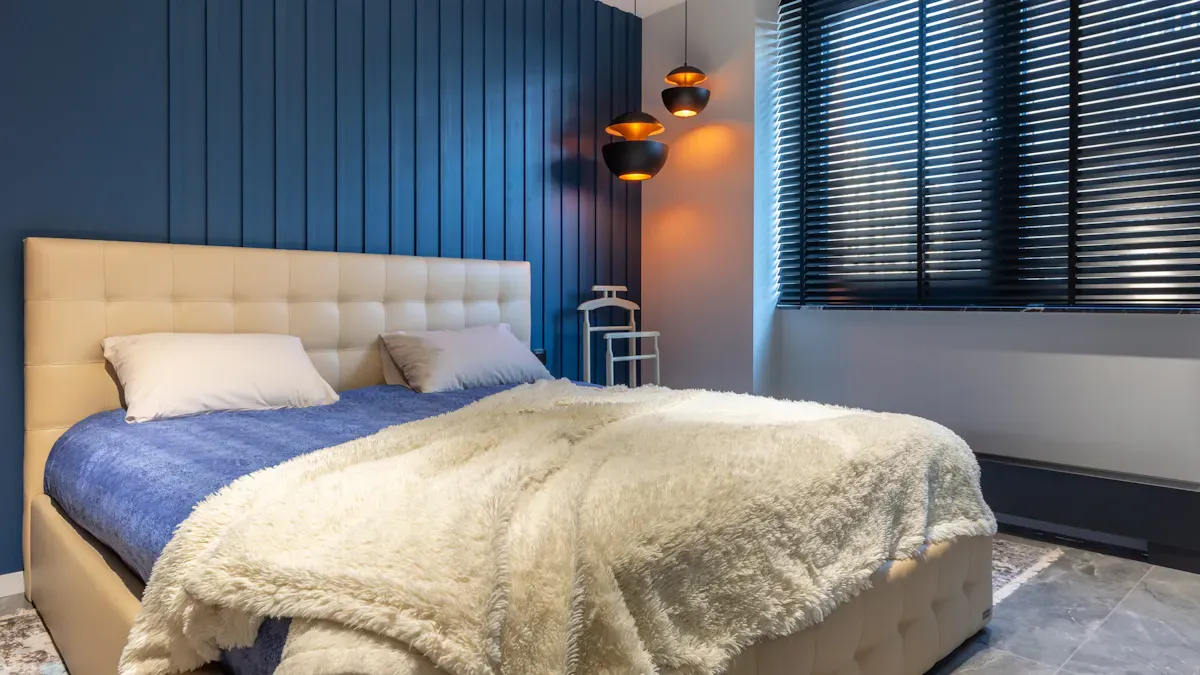
Choosing between translucent blinds and blackout shades depends on your space and what you value most. Imagine standing in your living room, wanting sunlight without harsh glare, or in your bedroom, craving restful sleep with total darkness. Many people focus on these main concerns when selecting window treatments:
Light control for comfort at any time of day.
Privacy needs, especially in rooms facing busy streets.
Energy efficiency to manage temperature and lighting costs.
Style and décor match for a cohesive look.
The purpose of the room, such as relaxing or working.
UNITEC offers a wide range of blinds fabrics to meet every need. Consider your goals for each room and let your preferences guide your choice.
Key Takeaways
Translucent blinds filter sunlight, providing soft light and daytime privacy, making them ideal for living rooms and offices.
Blackout shades block nearly all light, ensuring maximum darkness and privacy, perfect for bedrooms and media rooms.
Consider the purpose of each room when choosing blinds; match light control needs with the room’s function for optimal comfort.
Combining different types of blinds, like layering translucent with blackout shades, offers flexible light control and privacy options.
UNITEC provides a variety of customizable blinds, ensuring quality and style that fit your home’s decor and energy efficiency needs.
Overview of Translucent Blinds and Blackout Shades
What Are Translucent Blinds?
Translucent blinds are a popular choice for those who want to enjoy natural light without sacrificing privacy. These blinds filter sunlight, creating a soft and gentle glow in the room. They work well in living rooms, kitchens, and offices where a bright atmosphere is important. Translucent roller blinds come in different opacity levels, so you can control how much light enters your space. During the day, these window treatments allow you to see outside while blocking direct views from the street.
Tip: Translucent blinds are ideal for spaces where you want to reduce glare but still keep the room bright.
Feature | Description |
|---|---|
Designed to filter and diffuse light, allowing a soft and gentle glow to enter the room. | |
Privacy | Provides privacy during the day while still allowing some visibility from both inside and outside. |
Opacity Levels | Available in different opacity levels, affecting the amount of light that passes through. |
What Are Blackout Shades?
Blackout shades are designed to block nearly all outside light, making them perfect for bedrooms, media rooms, or any space where darkness is needed. These shades use special blackout fabrics, such as vinyl or polyester with an opaque backing, to prevent light from entering. Blackout roller blinds often feature multiple layers or side channels to stop light from seeping in around the edges. This construction also helps with insulation, keeping rooms cooler in summer and warmer in winter.
Blackout blinds use tightly woven materials and blackout coatings.
They can include honeycomb pockets or blackout liners for extra light control.
Blackout roller blinds meet strict international standards for safety and quality.
Key Differences
The main differences between translucent blinds and blackout shades come down to light control, privacy, and material construction. The table below highlights these distinctions:
Feature | Translucent Blinds | Blackout Shades |
|---|---|---|
Light Transmission | Allows partial light for a warm, diffused glow | Blocks 90-100% of light for a dark room |
Materials | Sheer or semi-opaque fabrics | Vinyl, polyester with blackout coating, opaque backing |
Privacy | Daytime privacy, some visibility | Maximum privacy, no visibility |
Best Use | Living rooms, kitchens, offices | Bedrooms, media rooms, nurseries |
UNITEC stands out as a trusted provider of both translucent and blackout roller blinds. The company’s products undergo strict inspection and hold certifications such as SGS, Greenguard, and Oeko-tex 100. Blackout roller blinds also meet OEKO-TEX® STANDARD 100, EN 13501-1 Fire Class B-s1, d0, and ISO 105-B02 for color fastness. These certifications ensure that every shade and blind meets high standards for safety, quality, and environmental responsibility.
Light Control and Ambiance
Translucent Blinds for Soft Light
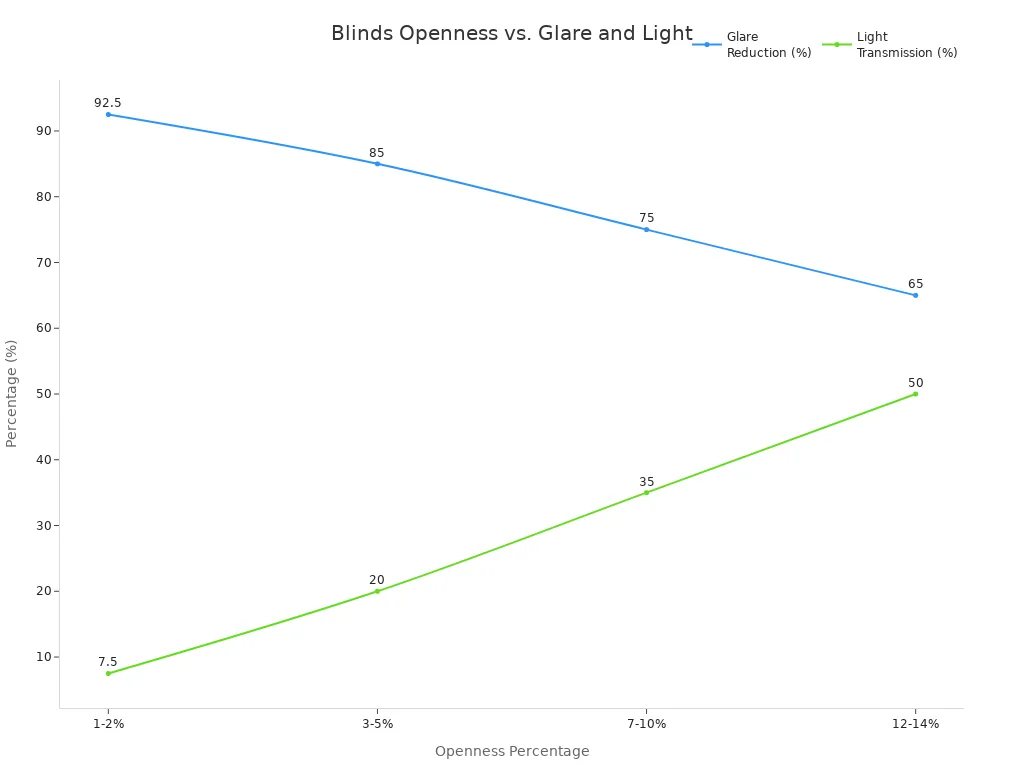
Translucent blinds offer gentle light control by filtering sunlight. These blinds reduce glare and create a soft glow, making rooms feel comfortable and inviting. Studies show that light filtering shades can cut glare by up to 85%, depending on fabric density and color. This helps reduce eye strain and keeps spaces bright without harsh sunlight. Translucent roller blinds from UNITEC come in different opacity levels, allowing you to choose how much light enters your room.
Window Treatment Type | Light Effect | Privacy Level |
|---|---|---|
Sheer | Bright, airy | Minimal |
Semi-Sheer | Sunlight, slight view | Moderate |
Light-Filtering | Soft glow, reduced glare | Moderate |
Room-Darkening | Darker, less sunlight | Strong |
Blackout | Nearly no light | Maximum |
Tip: Translucent blinds work well in living rooms, kitchens, and offices where you want natural light but need privacy.
Blackout Blinds for Total Darkness
Blackout blinds provide strong light control and block nearly all sunlight. These shades are perfect for bedrooms, media rooms, or any space where total darkness is needed. Blackout roller blinds from UNITEC use special fabrics and coatings to stop light from entering. This helps create a dark room, which is important for deep sleep and watching movies. Blackout shades also act as thermal shields, keeping rooms comfortable and saving energy.
Benefit | Description |
|---|---|
Light Blocking | Blocks all light, ideal for sleep and media rooms |
Enhanced Sleep Quality | Promotes deep sleep by eliminating disruptive light |
Privacy | Shadow-proof environment, no visibility from outside |
Reduces heating and cooling costs | |
UV Protection | Shields furniture and flooring from fading |
Deep Sleep: Boosts melatonin by eliminating disruptive light.
Energy Savings: Acts as a thermal barrier to reduce utility bills.
Protection: Shields furniture and flooring from UV fading.
Privacy: Ensures a shadow-proof environment.
Versatility: Available in various styles and systems.
Room Darkening Blinds vs. Blackout
Room darkening blinds block most sunlight but do not create total darkness like blackout shades. These blinds are suitable for living spaces where you want less light but do not need a completely dark room. Room darkening shades offer strong privacy and help reduce glare, making them a good choice for offices and family rooms. The choice between room darkening blinds and blackout blinds depends on your need for light control and privacy.
Blind Type | Opacity | Light Entry | Privacy Level | Best Use |
|---|---|---|---|---|
Sheer | High | Low | Low | Living rooms |
Light-filtering | Medium | Medium | Medium | Kitchens, offices |
Blackout | Low | Low | High | Bedrooms, theaters |
Note: UNITEC offers a wide range of blinds and shades, including translucent blinds, blackout blinds, and room darkening blinds, so you can match your window treatments to each room’s needs.
Privacy and Security
Privacy with Translucent Blinds
Translucent blinds offer a balance between light control and privacy during the day. Their light filtering properties allow sunlight to enter, creating a comfortable atmosphere while blocking direct views from outside. This means you can enjoy daytime privacy without sacrificing brightness. People inside can see out, but passersby cannot easily see in. However, at night, the situation changes. When interior lights are on, translucent blinds become more transparent. This allows people outside to see into your home. For rooms where nighttime privacy is important, such as bedrooms or bathrooms, these window treatments may not provide total privacy. Homeowners often choose room darkening blinds or blackout blinds for these spaces.
Blackout Blinds for Maximum Privacy
Blackout blinds and blackout shades are designed for maximum privacy and security. These shades cover windows completely, preventing anyone from seeing inside, even when lights are on. Blackout blinds use strong materials that resist cutting or tearing, which adds a layer of security for ground-level windows. They also help create a dark room, which is ideal for restful sleep or watching movies. Blackout shades ensure that indoor activities remain unseen, making them a top choice for bedrooms, nurseries, and media rooms. Many people also use room darkening blinds in living spaces where privacy is a concern but total darkness is not required.
Blackout shades provide complete window coverage.
They block visibility from outside, even at night.
Durable materials improve home security.
They help maintain a comfortable, private environment.
Nighttime Privacy Tips
Nighttime privacy is important for every home. Here are some tips to improve privacy after dark:
Use blackout blinds or blackout shades in bedrooms and bathrooms for total privacy.
Combine room darkening blinds with sheer shades for flexible light control and privacy.
Close all blinds and shades before turning on interior lights.
Consider double-layer window treatments for extra protection.
Tip: For rooms that need both natural light during the day and maximum privacy at night, consider pairing translucent blinds with blackout shades or room darkening shades. This combination offers strong light control and privacy whenever you need it.
Energy Efficiency and Insulation
Insulation with Translucent Blinds
Translucent blinds help filter sunlight and reduce glare. These window treatments offer moderate energy savings by letting in natural light while blocking some heat. They create a comfortable environment without making rooms too warm. The insulation properties of translucent blinds are not as strong as blackout shades, but they still contribute to energy efficiency in spaces where full darkness is not required.
Translucent blinds filter sunlight, reducing glare and heat.
They provide moderate insulation compared to blackout blinds.
These blinds work well in living rooms and offices where light control and comfort matter.
Tip: Use translucent blinds in rooms that need a balance of light and insulation.
Blackout Shades for Energy Savings
Blackout shades and blackout blinds are highly effective for insulation. Blackout fabrics block up to 99% of light and reduce solar heat gain by 75-85%. This makes them ideal for bedrooms and media rooms. When blackout roller blinds cover all windows, homeowners can see energy savings of up to 25%. Studies at Chicago’s Willis Tower showed that automated insulating shades reduced energy use by 25% during both heating and cooling seasons. If 20% of homes used cellular shades, the U.S. could cut carbon emissions by up to 3 million tons each year.
Blackout shades block nearly all sunlight and heat.
Blackout blinds help maintain indoor temperatures.
Room darkening blinds and room darkening fabrics also improve insulation.
Impact on Heating and Cooling
Blinds and shades play a key role in managing heating and cooling costs. The right window treatments can lower energy bills and reduce environmental impact. The table below shows how different shades affect energy savings:
Evidence Type | Details |
|---|---|
Energy Savings | |
Annual Savings | $100 to $300 for most households |
Payback Period | 1 to 3 years |
Heating Savings | 24% documented by Oak Ridge National Laboratory |
Carbon Emission Reduction | Up to 3 million tons annually if 20% of homes adopt cellular shades |
Blackout blinds and room darkening blinds offer strong insulation and energy savings. Translucent blinds provide moderate benefits, making them suitable for spaces where light control and comfort are priorities. Choosing the right shades can help create a more energy-efficient home.
Style and Design Choices
Design Options for Translucent Blinds
Translucent blinds offer a wide variety of design options to suit any room. These window treatments come in materials such as vinyl, fabric, faux wood, and sheer vertical styles. Each material brings its own look and feel. For example, vinyl is durable and easy to clean, making it great for high-traffic areas. Fabric options provide a soft appearance and come in many colors and patterns. Faux wood gives a classic look and resists moisture, while sheer vertical styles allow natural light to filter in.
Material | Characteristics |
|---|---|
Vinyl | Durable, easy to clean, excellent light control |
Fabric | Wide array of colors and patterns, soft appearance, diffuses light beautifully |
Faux Wood | Classic wood look, moisture resistant, low maintenance |
Sheer Vertical | Allows natural light, maintains privacy, ideal for diffused light areas |
Translucent | Diffuses light, creates a soft glow, good privacy, suitable for living areas |
Translucent roller blinds from UNITEC are available in custom sizes, making them a flexible choice for any window.
Blackout Blinds Styles
Blackout blinds come in several styles to match different interior themes. Roller blinds offer a sleek, modern look and work well in contemporary spaces. Roman blinds add elegance with their fabric folds, making them perfect for traditional dining rooms. Vertical blinds provide versatility and are ideal for sliding doors or eclectic designs. Blackout shades also come in a range of colors and materials, so they blend easily with your decor. Many people layer blackout shades with sheer curtains to combine function and style.
Style of Blackout Blinds | Design Theme | Description |
|---|---|---|
Roller Blinds | Modern | Sleek, minimalist, fits contemporary spaces |
Roman Blinds | Traditional | Elegant fabric folds, ideal for formal dining areas |
Vertical Blinds | Eclectic | Versatile, great for sliding doors and unique layouts |
Matching Decor with UNITEC Fabrics
UNITEC offers a wide range of colors, patterns, and custom sizes for both blinds and shades. Choosing the right color can help your window treatments blend with your existing decor. Neutral shades like beige, gray, or white work well with most color schemes. For bold interiors, deep blues or rich greens add a pop of color. Patterns also play a key role. Geometric designs suit modern spaces, while floral prints bring warmth to vintage or rustic rooms. UNITEC’s blackout fabrics and translucent options make it easy to create a cohesive look in any space.
Tip: Match your blinds or shades to your furniture and wall colors for a unified style throughout your home.
Best Rooms for Each Blind Type
Bedrooms and Room Darkening Shades
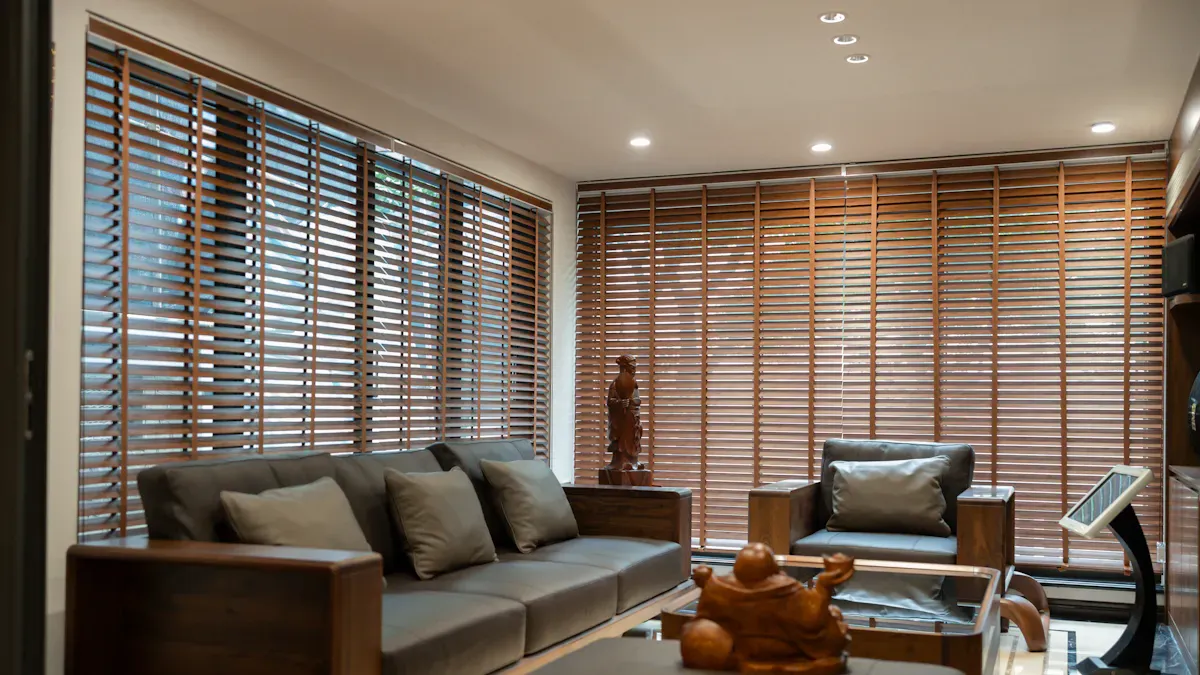
Bedrooms benefit most from room darkening blinds and blackout shades. These window treatments block outside light and help create a peaceful environment. Sleep studies show several advantages to using room darkening shades in bedrooms:
Better sleep quality by reducing unwanted brightness from outside sources.
Particularly beneficial for light-sensitive sleepers and those with early bedtimes.
Helps create a calmer and more sleep-friendly environment.
Room darkening blinds also provide privacy and help maintain a consistent temperature. Many people choose blackout blinds for nurseries and media rooms as well. The table below shows the most recommended rooms for each type:
Type of Blind | Recommended Rooms |
|---|---|
Translucent Blinds | Living rooms, Dining rooms |
Blackout Shades | Bedrooms, Media rooms, Nurseries |
Tip: For the best sleep, use room darkening blinds or blackout shades in bedrooms.
Living Rooms and Translucent Blinds
Living rooms need a balance of light and privacy. Translucent blinds allow soft, diffused light to enter, which creates a warm and inviting atmosphere. This effect enhances the ambiance more than other options. These blinds filter sunlight, reduce glare, and keep the space bright without harsh shadows. Room darkening blinds can also work in living rooms if you want to reduce glare on screens or add privacy during the evening.
Kitchens, Offices, and More
Kitchens and offices require flexible light control and privacy. The best shades for these spaces depend on window size and how much light you want. The table below compares popular options:
Blind Type | Privacy Level | Light Control Features |
|---|---|---|
Blackout Blinds | High | Complete light and visibility blockage |
Cellular Shades | High | Multilayered design with superior light control |
Vertical Blinds | Medium | Versatile coverage for large windows and sliding doors |
Venetian Blinds | Medium | Adjustable slats for precise light and privacy control |
Roller Shades | Varies | Options from sheer to blackout for flexible light control |
Roller blinds are ideal for a minimalist look and offer unobstructed views when open.
Vertical blinds work well for large windows and sliding doors.
Venetian blinds provide precise control over light and privacy.
Cellular shades offer excellent insulation and privacy.
Room darkening blinds are also a smart choice for home offices, as they reduce glare on screens and help maintain focus. Kitchens often benefit from roller shades or vertical blinds, which are easy to clean and adjust.
Choosing the Right Blinds for Your Space
Assessing Light and Privacy Needs
Selecting the best window treatments starts with understanding your needs for light control and privacy. Each room in your home serves a different purpose, so the right choice depends on how you use the space. Here are some practical steps to help you decide:
What’s the room’s main function? A living room often needs soft daylight, while a bedroom benefits from room darkening blinds or blackout shades for restful sleep.
What’s the window orientation? South- and west-facing windows get more sun, so consider room darkening shades or blackout blinds to reduce glare and heat.
How much privacy do you need? Ground-floor rooms or spaces facing busy streets may require maximum privacy, while upper floors can use translucent blinds for daytime privacy.
What’s your décor style? Match the color and texture of your blinds or shades to your room’s design for a cohesive look.
Do you value convenience? Motorized blinds offer easy operation and are ideal for hard-to-reach windows.
Tip: Testing fabric samples in your actual room helps you see how different shades perform under changing light conditions.
Window Orientation Tips
Window orientation plays a big role in how much sunlight enters your space and how much energy you can save. The direction your windows face affects both comfort and efficiency. The table below shows how different orientations impact energy savings and the best color strategies for blinds and shades:
Window Orientation | Light Blind Energy Savings | Dark Blind Energy Penalty | Optimal Color Strategy |
|---|---|---|---|
South-facing | 25-35% cooling reduction | 15-25% cooling increase | White/light gray mandatory |
West-facing | 20-30% cooling reduction | 12-20% cooling increase | Light colors strongly preferred |
East-facing | 15-25% cooling reduction | 8-15% cooling increase | Light colors recommended |
North-facing | 5-10% cooling reduction | 3-8% cooling increase | Color flexibility |
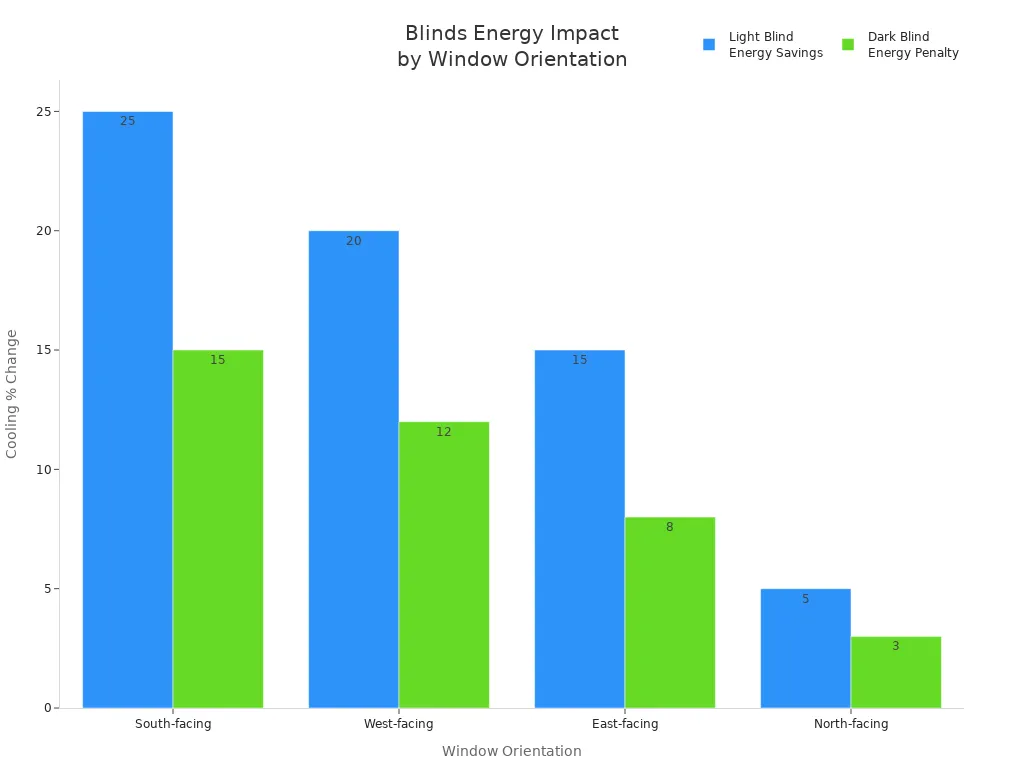
Choosing light-colored shades for south- and west-facing windows can lower cooling costs and keep rooms comfortable. North-facing windows offer more flexibility, so you can focus on style and privacy.
Combining Blinds for Flexibility
Combining different types of blinds and shades gives you more control over light, privacy, and comfort. For example, pairing room darkening blinds with soft curtains can create a flexible solution for any time of day. The table below highlights the benefits of combining window treatments:
Function | Blinds Contribution | Curtains Contribution | Combined Result |
|---|---|---|---|
Light Control | Precise adjustment | Softening harsh light | Complete control |
Privacy | Immediate coverage | Enhanced privacy | Maximum flexibility |
Insulation | Air gap creation | Fabric barrier | Superior energy efficiency |
Noise Reduction | Minimal | Significant absorption | Enhanced acoustics |
Maintain consistent color palettes for a harmonious look.
Coordinate hardware finishes for visual continuity.
Consider scale and proportion to avoid overwhelming small windows.
The most effective combinations use blinds like roller, venetian, or cellular for precise light control, paired with curtains that add insulation and style. For instance, room darkening blinds with linen curtains offer both privacy and a cozy atmosphere. Cellular shades with thermal curtains can maximize energy efficiency and comfort.
Note: Consulting UNITEC for samples and expert advice can make the selection process easier. UNITEC experts help you choose the right fabric for each room, ensuring durability, style, and performance. Testing samples in your space lets you see how the shades look and feel before making a final decision.
Choosing the right blinds depends on your space and goals.
Translucent blinds work best in living rooms and dining rooms for soft light and privacy.
Blackout shades suit bedrooms, media rooms, and nurseries where darkness and privacy matter most.
UNITEC’s direct control over production means consistent quality and quick, customized solutions.
Customization Technique | Benefits |
|---|---|
Embroidery | Enhances brand identity and coherence |
Screen Printing | Cost-effective and versatile for designs |
Request samples or consult UNITEC to find the perfect fit for your home.
FAQ
What is the main difference between translucent and blackout blinds?
Translucent blinds filter sunlight and provide soft light. Blackout blinds block almost all light and offer maximum privacy. Each type suits different rooms and needs.
Can I combine translucent and blackout blinds in one room?
Yes. Many people layer translucent blinds with blackout shades. This combination gives flexible light control and privacy for day and night.
Are UNITEC blinds fabrics safe for homes?
UNITEC blinds fabrics meet SGS, Greenguard, and Oeko-tex 100 standards. These certifications ensure safety and quality for families and businesses.
Which blinds help save energy the most?
Blackout blinds offer strong insulation and reduce heating and cooling costs. Translucent blinds provide moderate energy savings by filtering sunlight.
How do I choose the right color for my blinds?
Tip: Match blinds to your wall or furniture colors. Neutral shades fit most rooms. Bold colors or patterns add style and personality.